The practical takeaway
Beginner strength training does not need to begin with an intense plan or a gym identity. It can begin with learning a few movements, choosing a level that feels manageable, and returning often enough to become familiar. The goal is not to prove that you can push through discomfort. It is to give your muscles a reason to work and your body enough recovery to adapt.
For the wider picture, see Sustainable Movement and Recovery for Women, our guide to building movement around real life.
Start with what strength training actually means
Strength training is any activity that asks your muscles to work against resistance. That resistance might come from a machine, dumbbells, a resistance band, your body weight, a backpack, or a heavy gardening task. You do not need a complicated setup to begin.
The CDC recommends that adults include muscle-strengthening activity on two or more days a week, working the major muscle groups.[^cdc] That is a helpful public-health destination, not a rule that you must meet in week one. If one day feels like what your schedule and body can support, start there. Repetition is more useful than an ambitious routine you dread.
Choose a small group of familiar movements
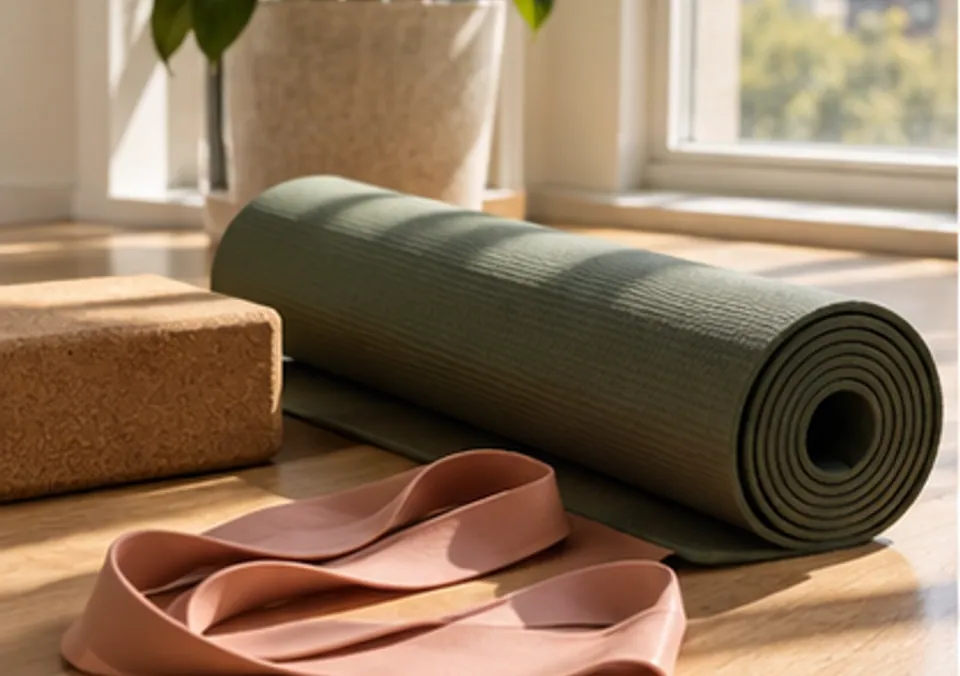
A simple session can include a lower-body movement, an upper-body push or pull, and a movement that asks your trunk to stay steady. For example, you might try a chair squat, a wall push-up, a resistance-band row, a step-up on a stable low step, or a light carry. The exact exercises matter less than doing them with control and a level of effort that feels appropriate for you.
Try one set first. Pause between movements. Notice your breathing and your form. If you are unsure how to use equipment, an in-person coach, qualified trainer, or beginner-focused class can offer useful guidance. Videos can be helpful for ideas, but they cannot see your body or adapt a movement when something does not feel right.
Let effort be informative, not punishing
Muscle work can feel challenging. You may notice warmth, effort, or the sense that another repetition would be difficult. Sharp pain, dizziness, chest discomfort, faintness, or a feeling that something is wrong are different signals. Stop and seek appropriate medical guidance rather than trying to “push through.”
You do not need to leave a workout exhausted for it to count. Especially at the beginning, finish with a little energy in reserve. This makes it easier to learn what your body feels like after a session and to return later in the week. Soreness can happen with new activity, but severe, worsening, or persistent pain should not be treated as a badge of progress.
Make room for recovery before you need it
Strength improves between sessions as well as during them. Leave space between workouts that challenge the same areas, and pay attention to sleep, meals, stress, and your general energy. A walk, gentle mobility, or ordinary daily activity may feel good on another day. Rest is not a gap in the plan; it is part of the plan.
If you are coming back after illness, injury, childbirth, a long break, or a period of very low energy, a qualified clinician or physical therapist can help you choose a safer starting point. The same is true if you have a chronic condition or take medicines that affect how exercise feels.
Build a routine that survives a busy week
Put the session next to something already in your life: after your Saturday coffee, during a lunch break at home, or before your usual shower. Keep the starting version short enough that you can do it on a normal week. A 15-minute session performed consistently can teach you more than an elaborate plan saved for a perfect Monday.
On a low-energy day, reduce the number of movements, use less resistance, or take an extra rest day. On a higher-energy day, you can add a set or spend a little more time learning. Flexibility is not lack of discipline. It is how a routine stays connected to your actual life.
What to do next
Keep a tiny record if it helps: the movements you tried, how many sets felt comfortable, and one note about how you felt the next day. This is not for comparison. It makes it easier to remember what worked when the week gets busy. If a movement consistently feels awkward or painful, replace it or ask for guidance; you are allowed to choose a different path.
After a few weeks, reflect rather than judging. Do stairs, groceries, or getting up from the floor feel a little more familiar? Do you feel more confident using a band or weight? Those observations are useful. You can keep the same routine, add a small amount of challenge, or ask a professional for help with the next step.
Pairing strength work with Walking for Wellbeing and intentional Rest Days and Recovery can make movement feel more balanced than any one workout.
Sources
Small sessions also leave room to learn what you enjoy. You may prefer a band at home, a machine at the gym, body-weight movements, or a class where someone else handles the plan. Preference is useful information. The routine you are willing to return to is usually more valuable than the one that looks most advanced on paper.
[^cdc]: Centers for Disease Control and Prevention. What Counts as Physical Activity for Adults. Reviewed December 6, 2023.

Written by
Adele Bennett
Osavelle editorial writer, making evidence-aware wellness guidance practical for women in the United States.