The practical takeaway
For a neighborhood walk, beginner strength session, or gentle class, you usually do not need a specialized nutrition plan. A useful starting point is simpler: do not repeatedly begin movement feeling ravenous, dehydrated, or so under-fueled that the rest of your day becomes harder. Regular meals, accessible snacks, and water can be enough places to begin.
This approach sits inside Sustainable Movement and Recovery for Women: support your life first, then let movement fit within it.
Start with your usual eating pattern
Food does not have to be earned by exercise, and exercise does not require a “perfect” meal beforehand. Look at the bigger rhythm of your day. Have you had something satisfying to eat? Will you be away from food for a while? Do you generally feel steady after your activity, or do you end up exhausted and overly hungry later?
The Dietary Guidelines emphasize healthy eating patterns over individual “good” or “bad” foods.[^dietary] That is a useful lens here. A meal or snack can be familiar, cultural, convenient, homemade, or bought on the way. The point is not to create a performance out of eating. It is to notice which choices help you feel supported.
Let timing be flexible
Some people feel comfortable walking or moving soon after a small snack. Others prefer more time after a full meal. There is no universal schedule. For an easy session, you may not need anything extra beyond your normal meals. For a longer or more demanding session, it can help to avoid going in extremely hungry.
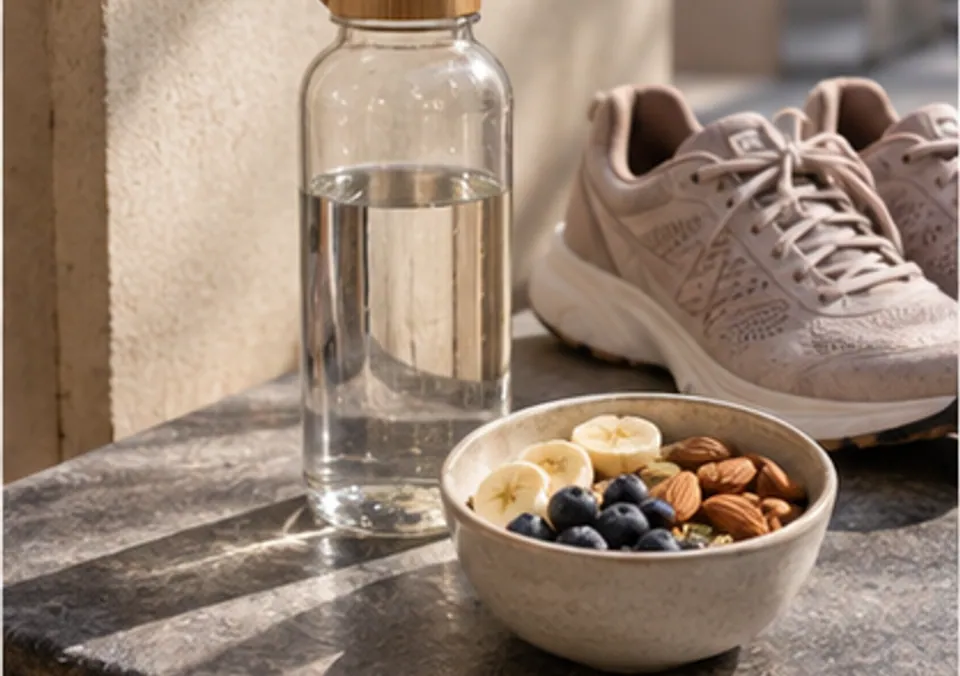
Keep options that are realistic for your day: fruit and yogurt, toast with something savory, a sandwich, leftovers, trail mix, or any snack you genuinely enjoy. If you are unsure what sits well before activity, try one small change at a time. Notice comfort, energy, and what makes the next few hours easier.
Hydration does not need a complicated formula
Water needs vary with climate, activity, health, pregnancy, medicines, and the foods you eat. Instead of chasing a perfect number, build small chances to drink: carry a bottle you like, have water with meals, refill before a walk, or keep a glass where you work. On very hot days or with longer, sweatier activity, your needs can change.
If you have a medical condition or have been told to limit fluids, follow the guidance of your care team. Persistent thirst, dizziness, faintness, or other troubling symptoms are reasons to talk with a qualified clinician rather than self-experimenting with drinks or supplements.
Think about the hour after movement
After gentle exercise, most people can return to their ordinary eating routine. A regular meal or snack later on can be a comfortable way to support the rest of the day. It does not need to be immediate, expensive, or designed for social media. The more useful question is whether you have access to food that feels satisfying and practical.
Strength work, a long active day, or a session that leaves you genuinely hungry may make an ordinary balanced meal especially welcome. Include foods you enjoy and can prepare or buy consistently. If you need personalized advice for a health condition, a registered dietitian can help without reducing food to rules.
Avoid turning food into a movement scorecard
Planning one backup option can reduce stress on hectic days. Keep a shelf-stable snack in a desk, bag, or car; know one nearby place where you can buy something filling; or freeze a meal you genuinely like. This is practical nourishment, not a rulebook. It gives your future self one less problem to solve when time is short.
It is easy for wellness messaging to make every snack feel like a calculation. Step back if you notice food becoming a reward, punishment, or compensation for movement. A walk does not require a “clean” dinner. A rest day does not mean you need less care. Your needs are shaped by far more than a single workout.
If eating, exercise, or body concerns feel consuming or distressing, professional support can help. You deserve guidance that protects both physical and emotional wellbeing. For a gentler approach to activity itself, see Rest Days and Recovery.
Sources
If activity changes your appetite a great deal or brings symptoms that concern you, pause the general advice and speak with a clinician or registered dietitian. Personalized care is more useful than trying to solve a persistent problem with increasingly strict food rules.
Your budget, culture, kitchen access, schedule, and appetite all belong in this conversation. Any approach that ignores those things will be difficult to sustain. Start with what is already available, then make one supportive change when it genuinely makes life easier.
[^dietary]: Office of Disease Prevention and Health Promotion. Dietary Guidelines for Americans. Accessed September 12, 2026.

Written by
Adele Bennett
Osavelle editorial writer, making evidence-aware wellness guidance practical for women in the United States.