The practical takeaway
Hydration does not need a giant bottle, a perfect number, or an all-day reminder app. It works better as a few ordinary chances to drink: with meals, after coffee, before leaving home, during a break, or after a walk. Your needs are not fixed; weather, activity, health, pregnancy, breastfeeding, and medications can all change them.
Healthy Habits That Actually Last treats water as one supportive habit among many, not a measure of whether you are “doing wellness” correctly.
Put water where the day already happens
Choose a bottle, cup, or glass you actually like using. Keep it where you work, next to the bed, or by the door. Have water with meals. Refill it after a routine cue. These small environmental choices are often more useful than trying to remember a rule from morning to night.
The CDC notes that getting enough water helps the body function normally and can prevent dehydration; needs vary by age, sex, activity, pregnancy status, and other factors.[^cdc] That variation is a reason to pay attention, not a reason to force one number on everyone.
Make the habit pleasant and flexible
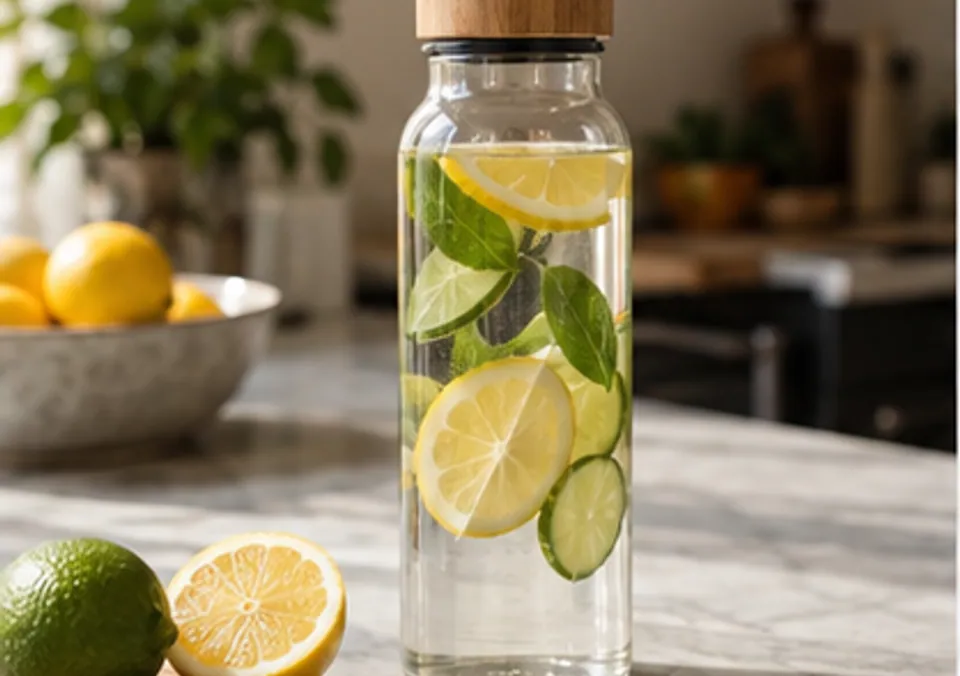
Plain water is not the only option. Sparkling water, unsweetened tea, and other beverages can be part of your day; foods with high water content contribute too. Add ice, lemon, or a flavor you enjoy if that makes drinking easier. The goal is not to make every drink virtuous. It is to have accessible choices that work for you.
You may need more fluid in heat, during illness, or with more activity. If you have been told to limit fluids or have a medical condition that affects hydration, follow your care team's advice. Persistent dizziness, fainting, unusual thirst, or symptoms that concern you deserve professional guidance.
Connect water to other routines
Fill your bottle while packing lunch. Drink a glass when you begin cooking. Bring water on a walk or to a class. These links make hydration part of your routine rather than a separate assignment. Simple Meal Planning Basics can make these cues easier to build into busy weeks.
If you miss a day, simply refill the next time you remember. A practical habit should be easy to resume.
Notice the situations that change the plan
Long travel days, hot weather, a busy commute, exercise, and illness can change when drinking feels easy. Think ahead only as far as needed: bring a bottle, identify where you can refill it, or have a drink with the next meal. Tiny preparations are more useful than trying to compensate at the end of the day.
Hydration is one part of care, not an answer to every dip in energy or mood. If a symptom is persistent or worrying, do not assume another beverage will solve it—ask a qualified professional for guidance.
Sources
[^cdc]: Centers for Disease Control and Prevention. About Water and Healthier Drinks. Reviewed March 5, 2026.

Written by
Adele Bennett
Osavelle editorial writer, making evidence-aware wellness guidance practical for women in the United States.