The practical takeaway
Meal planning is not a week of identical containers or a test of discipline. It is a small amount of thinking ahead that makes eating easier when you are tired, busy, or out of ideas. The most useful plan is built around meals you already enjoy and can realistically prepare, buy, or assemble.
For the wider framework, visit Healthy Habits That Actually Last. A meal plan should support your life, not become another job inside it.
Start with a flexible inventory
Before making a grocery list, look at what you have. Choose two or three meals that use familiar ingredients, one breakfast you can repeat if you want to, and a few snacks or lunch options. Include a backup: frozen vegetables, canned beans, eggs, soup, bread, a favorite takeout order, or anything that makes a hard evening less likely to end in stress.
The current Dietary Guidelines emphasize an overall eating pattern made up of nutrient-dense foods, including protein, dairy, vegetables, fruits, healthy fats, and whole grains.[^guidelines] That is a broad framework, not a requirement to build every plate identically. Cultural foods, budget, appetite, and access belong in the plan.
Plan components, not perfect menus
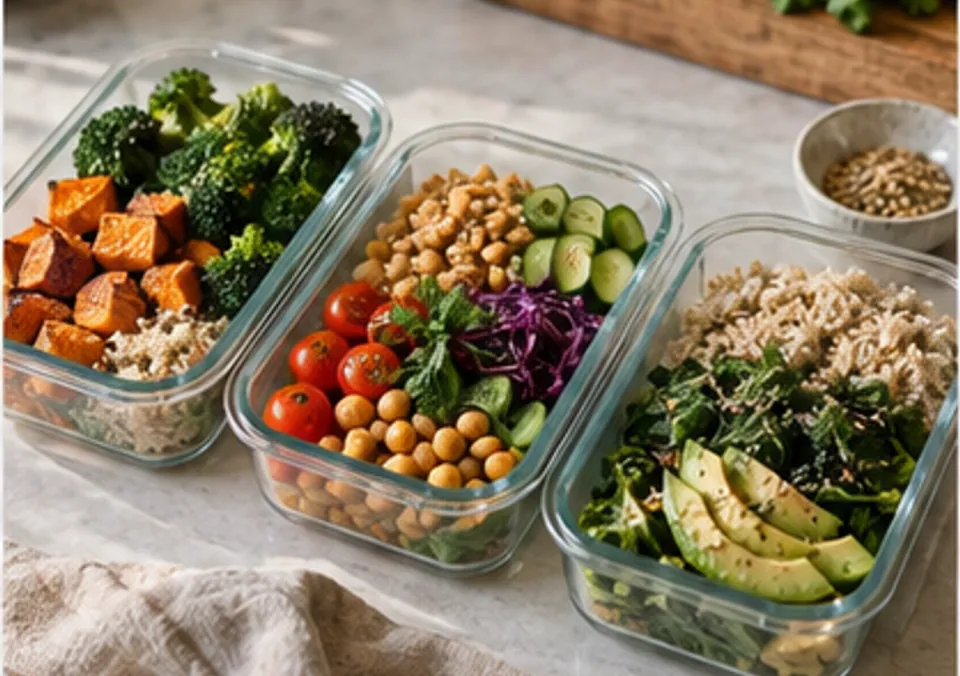
Some weeks, it is easier to prepare a few components than to map every dinner. Wash fruit, cook a grain, choose a protein, buy a bagged salad, or make one sauce you like. Then combine them differently across the week. Other weeks, you may want three exact dinners. Either approach can work.
Keep a short list of “no-thinking” meals for busy nights: a sandwich and soup, eggs and toast, a bean bowl, pasta with vegetables, rotisserie chicken and a salad kit, or leftovers. The best backup meal is not the most aspirational one; it is the one you will eat.
Make the plan responsive
Leave one or two meals unplanned for invitations, leftovers, low-energy evenings, or a change of appetite. Buy only what you can reasonably store and use. If something goes unused, do not treat it as failure. Ask whether the ingredient was inconvenient, unfamiliar, or simply wrong for that week.
Meal planning is easier when hydration is part of the environment too. Keep water available at meals and while cooking; Realistic Hydration Habits offers practical ideas without a rigid daily target.
A simple shopping rhythm
Keep a running list on your phone or fridge and add items as you notice them. Before shopping, check the calendar: how many evenings are actually open, which meals will happen away from home, and whether you need a backup for one demanding night. A shorter, more accurate list wastes less food and asks less of you.
It is also fine to use convenience foods. Pre-cut vegetables, frozen meals, canned foods, delivery, and a favorite prepared option can protect your energy when cooking from scratch is not realistic. Nutrition support should be practical enough to use.
Sources
[^guidelines]: Office of Disease Prevention and Health Promotion. Current Dietary Guidelines. Accessed September 12, 2026.

Written by
Adele Bennett
Osavelle editorial writer, making evidence-aware wellness guidance practical for women in the United States.