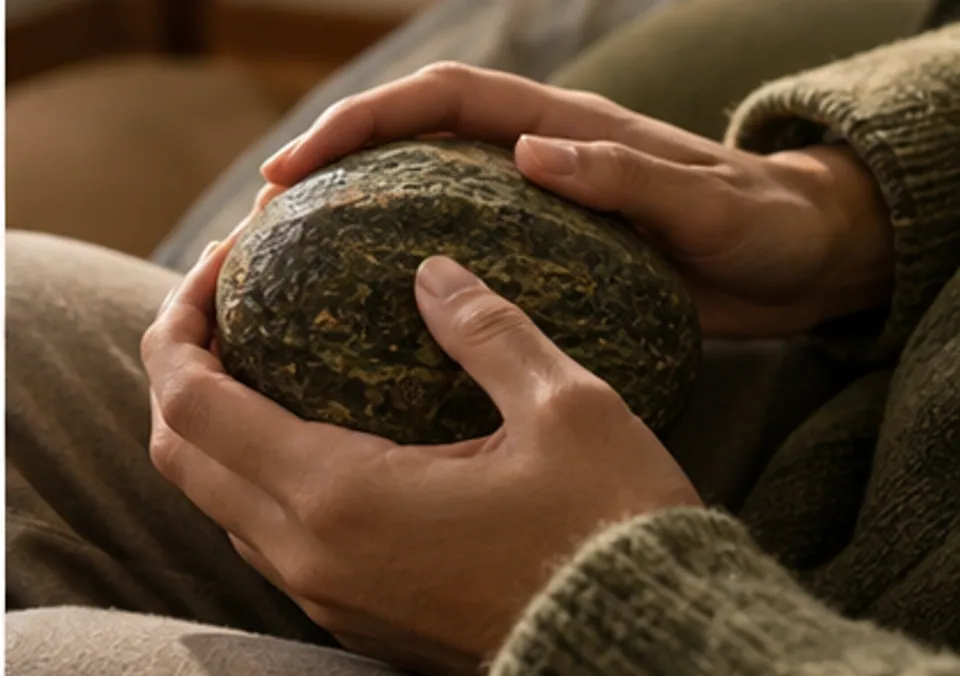
For anxiety that shows up suddenly, a racing heart, a spiraling thought pattern, a wave of dread, grounding techniques can help bring the moment back into a manageable range. These aren't a fix for what's driving ongoing anxiety, but they're genuinely useful tools for the moment itself.
The five senses method
Naming five things you can see, four you can touch, three you can hear, two you can smell, and one you can taste is a commonly used grounding exercise. It works by pulling your attention firmly into the present physical environment, away from whatever spiral triggered the anxious moment.
Slow, deliberate breathing
A slower, longer exhale than inhale is commonly associated with helping the body shift out of an acute stress response. This doesn't need to follow a specific formula to be useful, the general idea of slowing your breath down and extending the exhale is the part that tends to matter most.
Naming what's happening, out loud or on paper
Simply naming the feeling, "I'm feeling anxious right now," rather than trying to push it away, can reduce its intensity for some people. Writing it down, even briefly, can serve a similar purpose, externalizing the thought rather than letting it circle internally.
Physical movement or a change of environment
Stepping outside, changing rooms, or a short burst of movement can interrupt the physical intensity of an anxious moment, partly by giving your body and attention something concrete to do.
If grounding techniques aren't helping
If these tools consistently don't help, or if anxious moments are happening often enough that you're relying on grounding techniques regularly just to get through a day, that's worth mentioning to a doctor or therapist directly. Frequent, difficult-to-manage anxious moments are a reasonable enough reason on their own to seek professional support, not something to keep managing alone indefinitely.
Our guide to recognizing when anxiety needs more support goes further into what that shift can look like.
Editorial safety note (Satellite 3): Requires clinical review. This article intentionally excludes any technique involving physical discomfort, temperature shock, or sensory intensity (e.g., ice, cold water) as a coping mechanism, in line with general guidance against reinforcing self-harm-adjacent coping patterns. Keep this exclusion in any future edits to this piece.

Written by
Adele Bennett
Osavelle editorial writer, making evidence-aware wellness guidance practical for women in the United States.