The practical takeaway
There is no single food that guarantees a better night. Your dinner, late snack, caffeine timing, stress level, schedule, and bedroom all matter more than a trendy ingredient. Still, food can be a useful part of the bigger picture. This guide sits inside our Sleep & Recovery for Women framework and focuses on everyday choices that make evenings feel steadier, not restrictive. It meets you where your usual evening already is.
Start with regular meals, not a “sleep food” hunt
When sleep feels off, it is easy to look for a quick fix: a tea, powder, gummy, or viral recipe. Most nights are more complicated than that. A more practical starting point is making sure you are eating enough, often enough, and in a pattern that works with your day.
The National Heart, Lung, and Blood Institute advises regular meals and avoiding late-night dinners as part of healthy sleep habits.[^nhlbi-insomnia] That does not mean everyone needs the same dinner time. It means that wildly skipping meals all day and arriving at bedtime ravenous can make a wind-down harder.
Look for a dinner that leaves you satisfied. For many people, that includes a carbohydrate source, protein, fats, and something with color or fiber. Pasta with beans and vegetables, salmon with potatoes and greens, a rice bowl, or a hearty soup with bread can all fit. Wellness does not have to look identical every night.
If you are hungry near bedtime, keep it simple
Going to bed hungry is not a sleep strategy. The NHLBI notes that a light snack can be okay, while a heavy or large meal within a few hours of bedtime may be disruptive for some people.[^nhlbi-habits]
Choose something easy and familiar. A few examples:
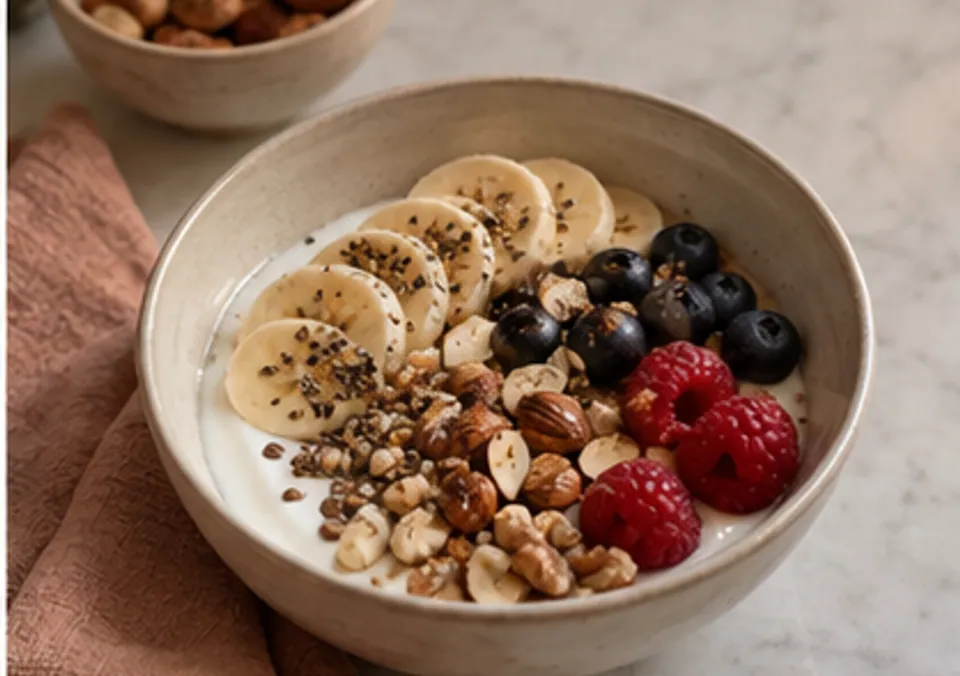
- yogurt with fruit
- toast with peanut butter
- a banana with a handful of nuts
- oatmeal
- crackers and cheese
- leftover soup or half a sandwich if you need something more substantial
There is no prize for choosing the smallest possible snack. The goal is to feel comfortably fed, not overly full or preoccupied with hunger. If reflux, digestive symptoms, diabetes, pregnancy, or another health condition affects your evening eating, individualized medical or nutrition guidance matters more than a generic list.
Treat caffeine timing as an experiment
Caffeine is one of the clearest food-and-drink habits to examine because it can stay in your system for hours. The NHLBI describes caffeine as a stimulant and notes that its effects can last up to eight hours for some people.[^nhlbi-habits] The CDC similarly recommends avoiding caffeine in the afternoon or evening as part of healthier sleep habits.[^cdc]
You do not need to quit coffee to learn from this. Try moving your last caffeinated drink earlier for a week. Notice whether you fall asleep more easily, wake less, or simply feel no different. Coffee, tea, soda, energy drinks, chocolate, and some pre-workout products can all contribute, so look at the whole picture rather than blaming one latte.
The same goes for alcohol. It may feel like it helps you relax, but the NHLBI advises avoiding alcoholic drinks before bed because they can interfere with sleep.[^nhlbi-habits] If you drink, experiment with having it earlier, pairing it with food, or taking alcohol-free evenings to see what changes for you.
Build an evening that is not food-focused
Food can support a sleep-friendly routine, but it should not carry the full job of calming your day. The most helpful evening habits are often boring in the best way: a consistent wind-down, a quieter bedroom, less late caffeine, and enough time to transition.
That is why I like pairing a simple snack decision with a next action. After dinner, make tea without caffeine and put your phone on its charger. If you are hungry later, choose a snack, eat it sitting down, then start your bathroom routine. This turns food from a late-night debate into one calm part of a sequence.
For the rest of that sequence, use Screen Habits Before Bed: Small Changes Worth Trying. A screen boundary can make the time after an evening snack feel less open-ended.
Be careful with supplement-shaped promises
Sleep supplements are marketed with a lot of certainty. Food-first habits are usually a more grounded place to begin, especially when you are not dealing with a diagnosed deficiency or receiving professional guidance. The research on diet and sleep is still developing, and reviews point to the need for more work on dietary patterns and broader measures of sleep health.[^diet-review]
That does not mean food does not matter. It means a single nutrient, drink, or supplement should not be sold as the missing answer. Before taking any sleep supplement, especially if you take medications, are pregnant, or have a health condition, speak with a qualified clinician or pharmacist.
A flexible plan for tonight
If you want to make one change, choose the easiest of these:
- Eat a satisfying dinner instead of trying to “save calories” and then grazing late at night.
- Move tomorrow’s caffeine slightly earlier.
- Keep a familiar light snack available if you tend to get hungry after dinner.
- Pair your snack or tea with a non-food wind-down cue, such as dimming lights or putting your phone away.
Small observations will teach you more than a strict bedtime menu. Notice how you feel, keep what helps, and let your routine stay flexible.
When to get further support
Food changes are not a substitute for care when sleep problems persist. Talk with a healthcare professional if you regularly struggle to sleep, have severe daytime fatigue, or notice symptoms such as breathing pauses during sleep. A registered dietitian can also help if eating around workouts, evening hunger, or food rules feels confusing or stressful.
Sources
[^cdc]: Centers for Disease Control and Prevention. About Sleep. Reviewed May 15, 2024.
[^nhlbi-habits]: National Heart, Lung, and Blood Institute. Healthy Sleep Habits. Updated March 24, 2022.
[^nhlbi-insomnia]: National Heart, Lung, and Blood Institute. Insomnia Treatment. Accessed September 12, 2026.
[^diet-review]: St-Onge MP, et al. Diet and Sleep Health: A Scoping Review of Intervention Studies in Adults. 2020.

Written by
Adele Bennett
Osavelle editorial writer, making evidence-aware wellness guidance practical for women in the United States.